

The panel discussed: measurement of outputs versus outcomes; endorsement of innovations from clinical leadership; system leadership giving clinical staff headspace to innovate; frontline data literacy; spending too much time on solutions before fully understanding the problems and the impact on all stakeholders.
Health Innovation North West Coast welcomed 65 health care professionals, innovators and those from the higher education community to UCLan’s new Engineering and Innovation Centre in Preston on 3 July for a morning of knowledge sharing and discussion about systems working in Lancashire and South Cumbria. This was our first in a series of quarterly events that will alternate between our two ICB regions.
Harnessing the potential of data emerged as the theme of the day, and the programme featured:
- Asim Patel, Chief Digital Officer from Lancashire and South Cumbria ICB who gave insight on how the ICB is using its data.
- Rebecca Richmond, Director of Public Health from Optum UK, delivered an engaging presentation on population health management that is “driven by data, performed by humans”. Her message was that data itself isn’t the answer to all your questions – instead it helps you ask “really good” questions to have more meaningful conversations. She had a number of “theographs”, which were a demonstration on how linked datasets can show a person’s whole system experience.
- A very interesting (but too short!) panel discussion with: Linda Vernon, Head of Digital Empowerment, Lancashire and South Cumbia ICB; Steve Warburton, Director of Delivery, Healthcare & Transformation, MIAA; Jim Richards, Associate Dean for Research and Knowledge Exchange, University of Central Lancashire; Mark Ratnarajah, Managing Director, C2-Ai; and Andrew Cooper, Clinical Director, Health Innovation North West Coast.
- Jenni West, Associate Director of Digital for Health Innovation North West Coast, talked about a real world evaluation of virtual wards in Cheshire and Merseyside, and how her team created a data dashboard asset to help with ongoing evaluation of this programme in the long term.
- Two product pitches from the national Clinical Entrepreneur programme: Seamus Coyle from the Clatterbridge Cancer Centre NHS Foundation Trust and Hinnah Rafique from Generation Medics.
- Other health industry representatives, including IQVIA, Feebris, Lenus Health and C2-Ai, were on hand to showcase their latest innovations.
Watch for the announcement of our next Health Innovation Collaborative event in Cheshire and Merseyside on LinkedIn, X, through our stakeholder newsletter or on the events section on our website.
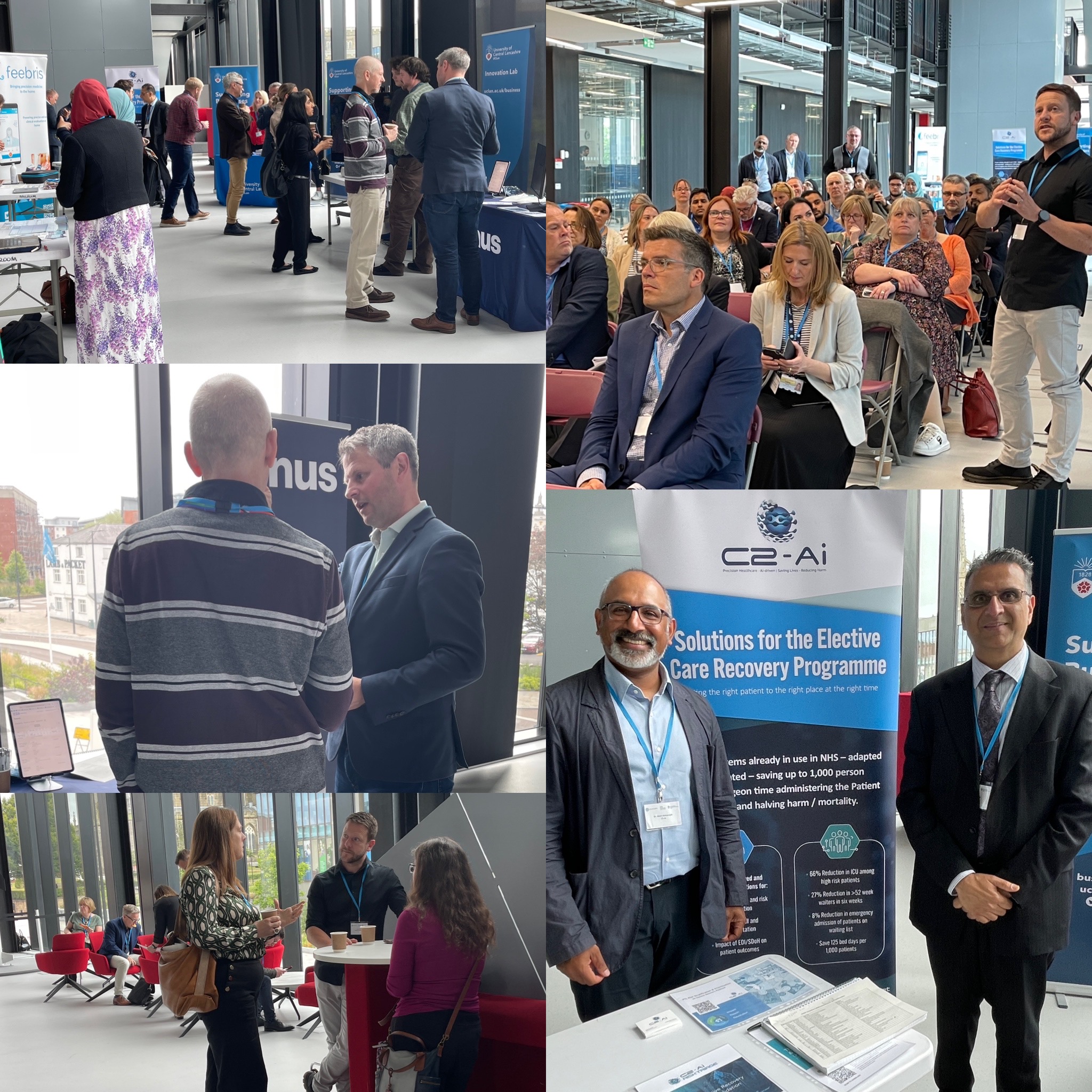
Innovators including Feebris, Lenus Health, C2-Ai and Generation Medics showcased their innovations in the foyer.
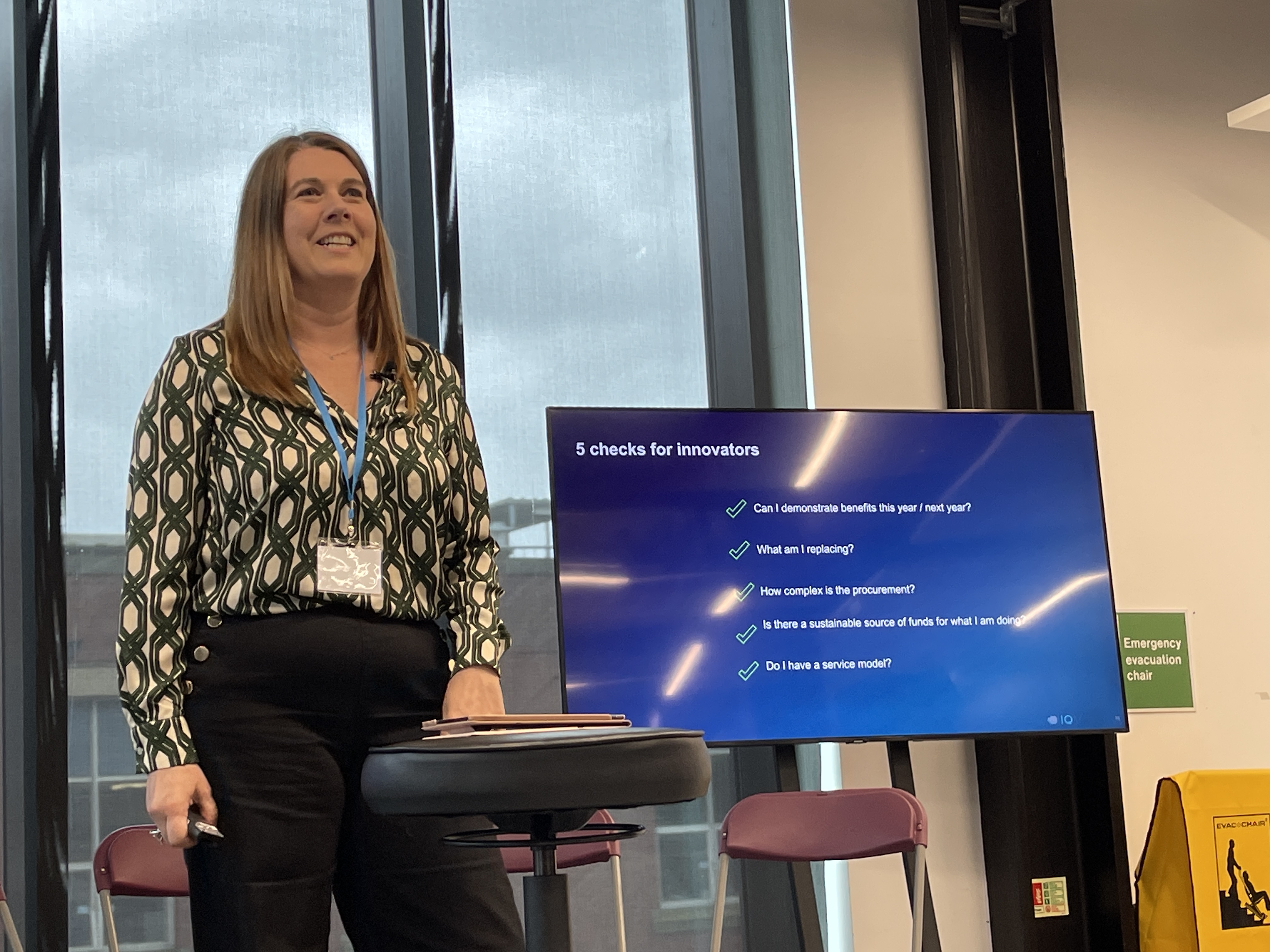
Rosalind Way, Director of National NHS Engagement at IQVIA talking about transformation barriers and enablers.
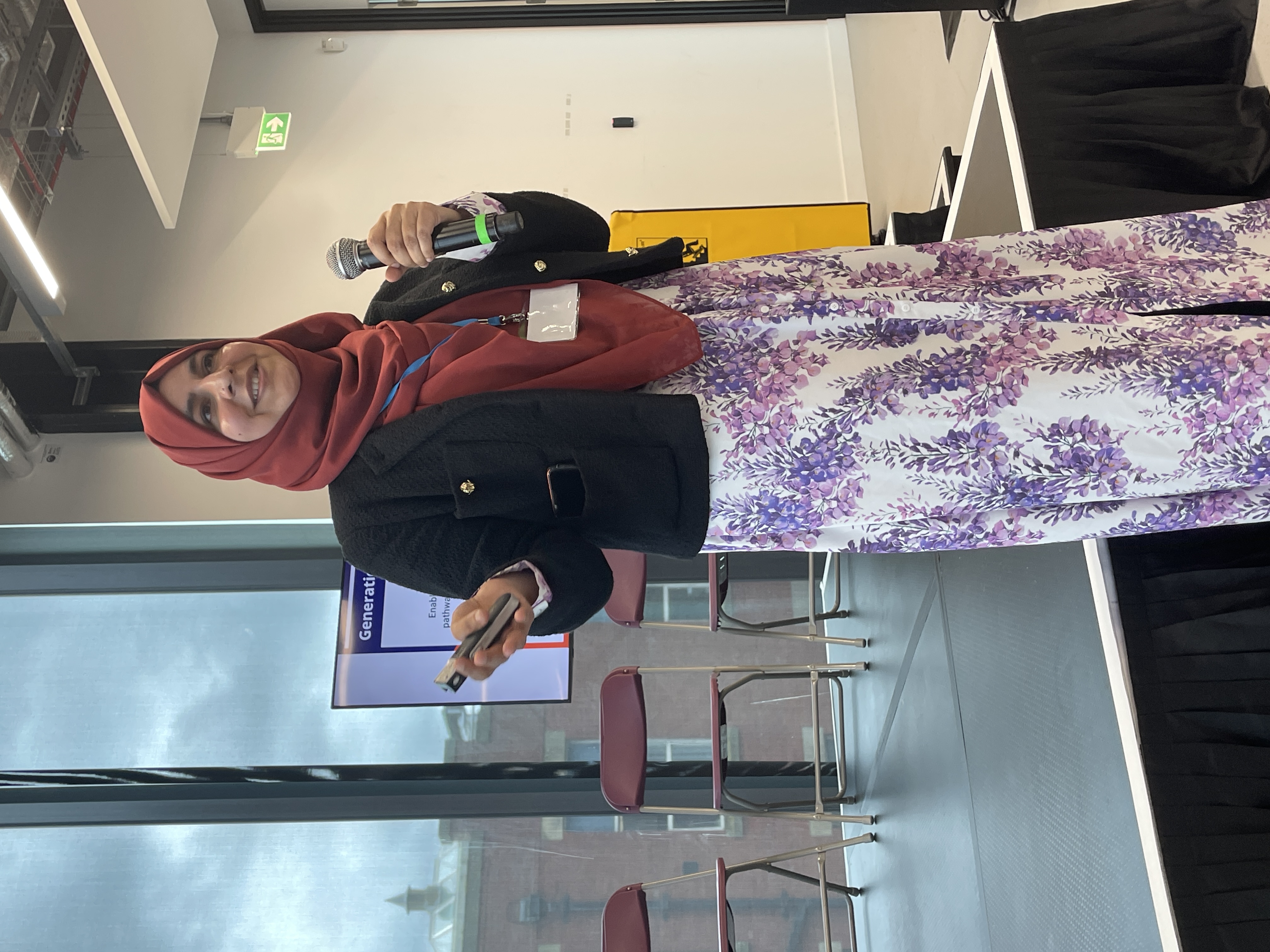
Hinnah Rafique, clinical entrepreneur and founder of Generation Medics giving an overview of her business.
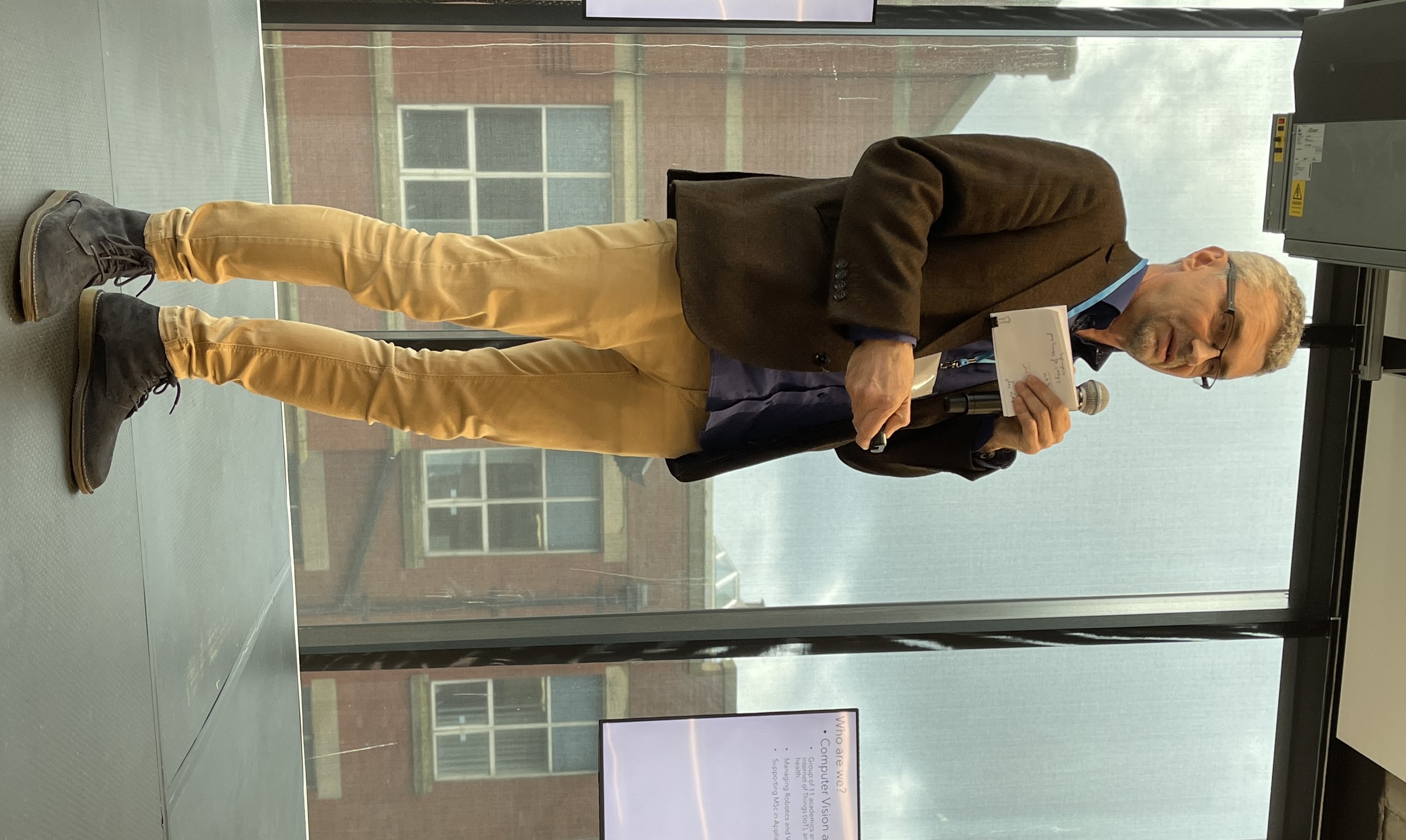
Bogdan Matuszewski, Professor of Computor Vision, UCLan talking about the AI and health care.
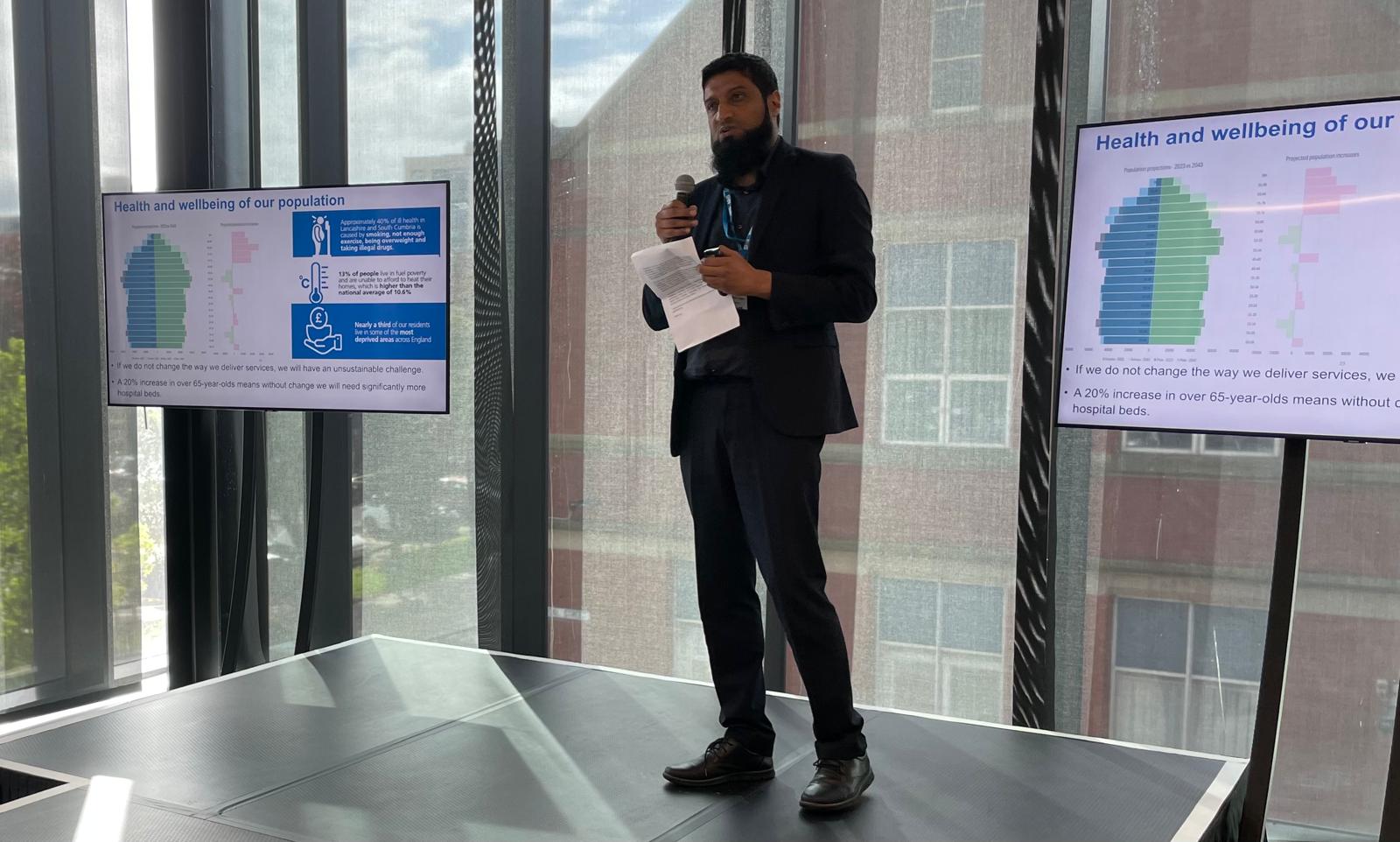
Asim Patel, Chief Digital Officer from Lancashire and South Cumbria ICB, giving an overview of the current state of the ICS.
News and blogs >
Strategic partnership will shape the future of health and care Read more
a { text-decoration: none; color: #464feb; } tr th, tr td { border: 1px solid #e6e6e6; } tr th { background-color: #f5f5f5; } Partners across the NHS, industry and innovation sector have signed an agreement to improve care through innovation.
Innovation delivers boost to adult ADHD services Read more
Adults with ADHD are set to receive more timely NHS support closer to home as part of a programme being evaluated in several regions of England.
Momentum Accelerator launches to help health innovators navigate NHS adoption Read more
This week sees the launch of 2026 Momentum Accelerator programme.
Summit explores potential of point-of-care testing Read more
A conference to explore the potential of point-of-care testing (POCT) to improve health outcomes attracted senior leaders and expert contributors from across the North West and beyond.